The Process of Planning a Funeral
How to Plan a Funeral - The Basics
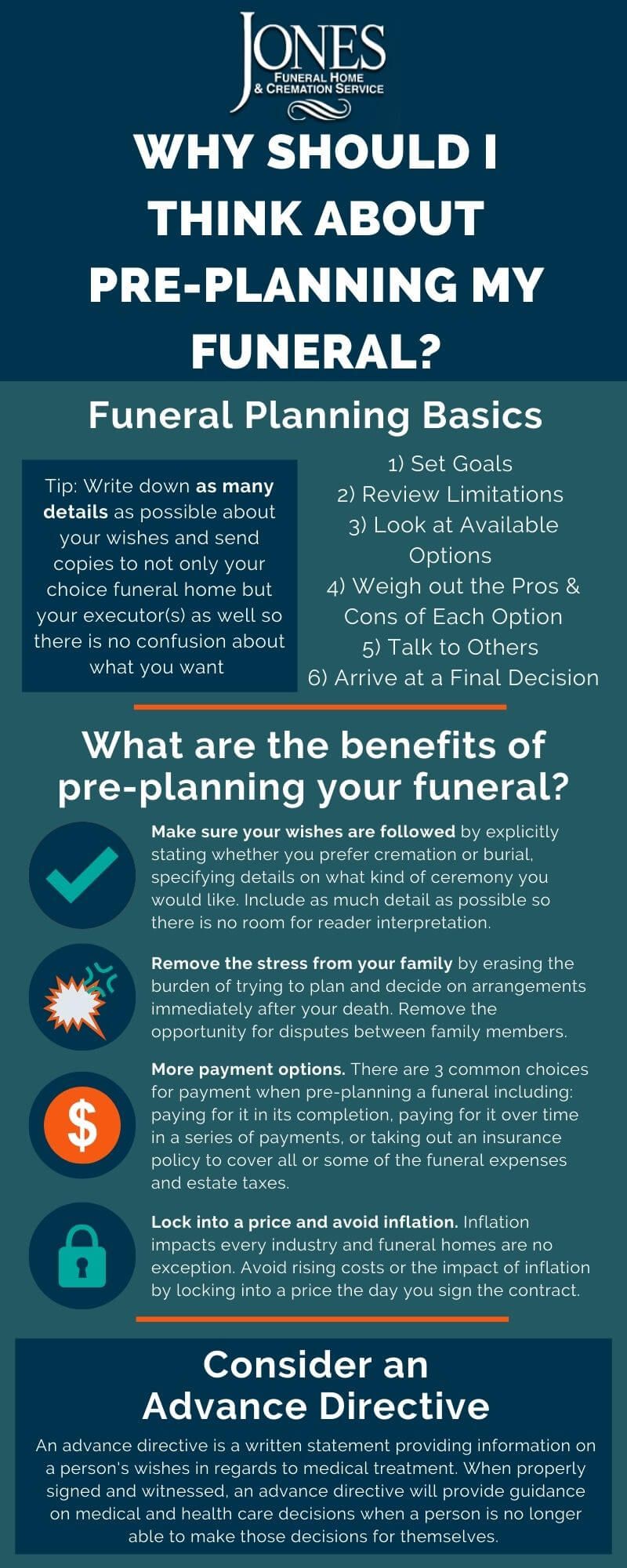
- Set goals
- Review limitations
- Look at available options
- Weigh the pros and cons of each option
- Talk to others about the best options
- Arrive at a final decision
- Write out your plan with as many details as possible.
- Send your plan to the funeral home and provide a copy to your executor.
Benefits of Pre-Planning Your Funeral Arrangements
If someone were to ask you, “what’s the benefit of making funeral arrangements in advance?”, the simple answer is that “it helps prevents mistakes.” Therefore, many of us make plans in many aspects of our life. We plan for our wedding, our children’s education, family vacations, and other significant expected life events. Also, we plan for unexpected life events by purchasing home, auto, and medical insurance.
So why don’t more people plan their funeral? Obviously planning your own funeral is morbid and does not fill you with positive emotions, but it remains very important and beneficial.
Make Sure All Your Wishes Are Followed
Making funeral arrangements in advance ensures that your family follows how you want to be honored when you die. First, you can explicitly state that you would like to be cremated vs buried. Then you can specify if you would like a ceremony to honor your life and what that ceremony would look like and include. You can get very detailed with your instructions such as detailing where you would like your ashes scattered. Preplanning your funeral ultimately gives you control and power to make important decisions.
Remove the Stress from your Family
Trying to plan a funeral immediately after a loved one’s passing is very difficult. Family members are overcome with grief and not necessarily thinking clearly. By preplanning a funeral, you can relieve your family of the burden of making these arrangements. Instead, when death occurs, your loved ones can focus their energy on comforting one another and mentally preparing for the service.
It’s also common for family members to disagree on a loved one’s final arrangements. Clearly communicating your wishes in your plans can quickly resolve disputes. Preplanning a funeral is an easy way to avoid disputes and remove the stress from your family.
More Payment Methods
Preneed funeral plans offer families more convenient payment options than those who are in immediate need. Those who choose to preplan often have three choices when it comes to paying for the service.
- You can pay for your funeral service in advance, which is often referred to as a prepaid funeral. Choosing this option will place your money into a trust where it can earn interest over time. This means when you pass away, your family could get a refund on the costs or have extra money to add something meaningful to the service.
- You can take out an insurance policy. If you qualify, when you do pass away, the policy will be used to cover some or all of the funeral expenses or estate taxes.
- You can pay over time. Most families are paying for the funeral costs at a lump sum after the funeral has concluded. Instead you can make smaller, incremental payments over time to start eating at the cost. In this instance, you can add these payments into your monthly budget.
Lock into a Price and Avoid Inflation
Inflation impacts every industry and funeral homes are not exempt. When you pre-plan a service and pay in advanced, you can lock into a price on the day you sign the contract and potentially avoid the impact of inflation or rising costs.
Advance Directives
What is an Advance Directive?
Other Things to Know About Advance Directives
- Advance directives are legal throughout the United States.
- Governing laws vary so be sure to obtain an advance directive that complies with your state's laws.
- You do not need an attorney to complete an advance directive.
- If you reside in more than one state, you should complete an advance directive for each state where you spend a significant amount of time.
- There are no time limitations on advance directives. A signed advance directive remains in force until a new one is completed.
- Periodically review your advance directive to make sure it still reflects your desires. If it doesn't, don't try to amend it; simply complete a new one.
- Paramedics and emergency medical technicians cannot recognize or honor a living will or medical power of attorney. They are obligated to do their best to stabilize the patient and get them to the hospital. When you are in the care of hospital personnel, your advance directive becomes valid.
Where to Obtain an Advance Directive Form
Start the Funeral Pre-Planning Process Today
Using the Online Funeral Pre-Planning Tool
Turn to the Professionals